Waterproofing is an important part of building a home that remains comfortable, durable, and protected over time. Areas such as terraces, bathrooms, balconies, kitchens, foundations, and exterior walls can regularly come into contact with moisture and water.
When water enters cracks, joints, porous surfaces, or poorly protected areas, it can gradually affect finishes and create problems that may require costly repairs. Planning suitable waterproofing measures during construction can help reduce these risks and protect the building.
Why Is Waterproofing Important?
Buildings are exposed to different sources of moisture throughout their lifetime. Rainwater can collect on terraces, bathrooms are regularly exposed to water, and groundwater can affect foundations and lower-level structures.
Without suitable protection, moisture may penetrate building surfaces and reach areas that are difficult to access later.
Proper waterproofing helps create a barrier against water penetration and supports the long-term performance of the building.
Common Areas That Need Waterproofing
Not every part of a building requires the same waterproofing solution. Different areas have different exposure conditions and application requirements.
Terraces and Roofs
Terraces are directly exposed to rain, sunlight, temperature changes, and standing water. Even small cracks or poorly sealed joints can become potential pathways for moisture.
A suitable waterproofing system can help protect the terrace surface and reduce the possibility of water entering the structure below.
Proper slope and drainage are also important. Waterproofing alone cannot compensate for poor water drainage.
Bathrooms
Bathrooms experience frequent exposure to water. Floors, walls, corners, pipe penetrations, and areas around sanitary fixtures require careful attention.
Waterproofing should generally be planned before the final tile installation so that vulnerable areas can be properly treated and protected.
Balconies
Balconies are exposed to both rain and regular environmental conditions. Water can collect around corners, floor edges, drainage points, and joints if the area is not designed and finished correctly.
A suitable waterproofing system combined with proper slope and drainage can help protect the underlying structure.
Kitchens
Areas around sinks, plumbing connections, and wet zones can also benefit from appropriate moisture protection.
The exact waterproofing requirements depend on the kitchen design and the level of water exposure.
Foundations and Lower-Level Areas
Foundations and structures close to the ground can be exposed to moisture from surrounding soil and groundwater.
Depending on the site conditions and building design, suitable damp-proofing or waterproofing measures may be incorporated into the construction system.
Different Types of Waterproofing Solutions
Waterproofing products are available in different forms, and each is designed for particular applications.
Liquid Waterproofing
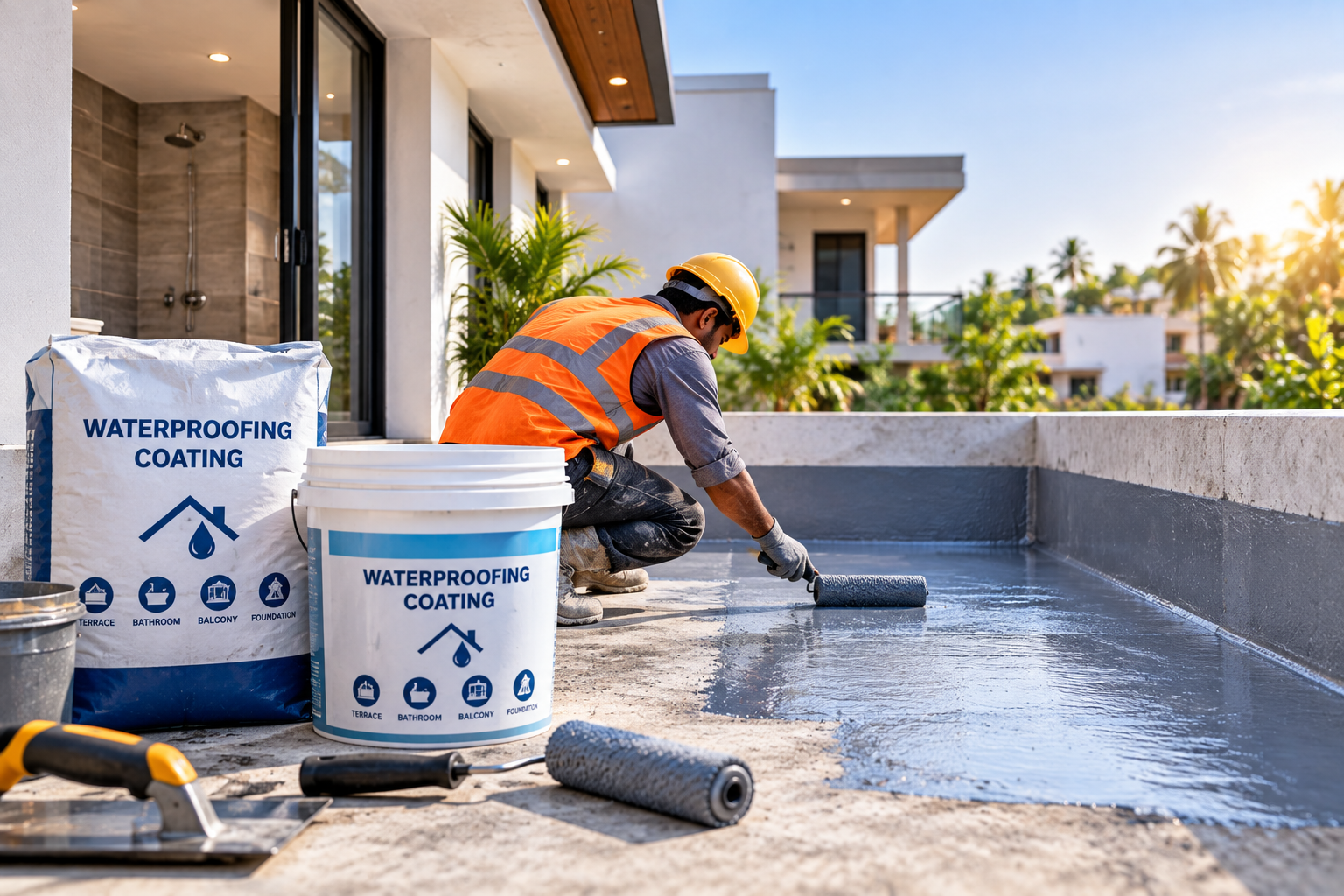
Liquid waterproofing products can be applied over prepared surfaces to form a continuous protective layer after curing.
They can be useful for certain terraces, bathrooms, balconies, and other applications depending on the product specifications.
Cement-Based Waterproofing
Cement-based waterproofing systems are commonly used on concrete and masonry surfaces.
They can be suitable for selected wet areas and structural surfaces when applied according to the manufacturer’s recommendations.
Polymer-Based Waterproofing
Polymer-modified waterproofing products are designed to improve flexibility, adhesion, and protection depending on their formulation and intended application.
The specific product should always be selected based on the surface and exposure conditions.
Waterproofing Additives
Some waterproofing products are designed to be incorporated into cementitious mixes or construction materials.
These products should be used according to the manufacturer’s dosage and application instructions.
Surface Preparation Is Essential
Even a high-quality waterproofing product requires proper surface preparation.
Before application, the surface should generally be clean, sound, and free from loose particles, dust, oil, or other contaminants that may affect adhesion.
Cracks, joints, holes, and damaged areas may need to be repaired before the waterproofing system is applied.
The exact preparation method depends on the product and surface.
Proper Slope and Drainage Matter
Waterproofing and drainage work together.
A terrace or balcony with inadequate slope can allow water to remain on the surface for extended periods. Similarly, blocked or poorly positioned drainage outlets can create unnecessary water accumulation.
During construction, drainage points and slopes should be planned carefully so that water can move away from the building efficiently.
Pay Attention to Joints and Penetrations
Many waterproofing problems occur around vulnerable details rather than large open surfaces.
Pipe penetrations, floor-wall junctions, construction joints, expansion joints, corners, and drainage outlets require careful treatment.
These areas should be addressed using the appropriate system recommended for the application.
Follow the Product Instructions
Different waterproofing products have different application requirements.
Before using a product, check:
- Surface preparation requirements
- Mixing instructions
- Recommended coverage
- Number of coats
- Recoat interval
- Drying or curing time
- Suitable application tools
- Weather restrictions
- Recommended substrate
- Safety precautions
Following the manufacturer’s instructions is essential for achieving the intended performance.
Waterproofing Should Be Planned Early
Waterproofing is much easier to incorporate during construction than to repair after a finished building develops a leakage problem.
Planning the waterproofing system early allows the construction team to consider drainage, surface preparation, pipe penetrations, joints, tile installation, and finishing work together.
This approach can help avoid unnecessary rework later.
Don’t Treat Waterproofing as a Single Product
A successful waterproofing system is usually more than simply applying a coating.
It can involve:
Surface preparation → Crack and joint treatment → Waterproofing application → Proper curing → Protection layer → Final finishing
The exact sequence depends on the application and product system.
Using the right combination of materials and following the correct installation procedure is important.
Regular Inspection Helps
Even properly waterproofed areas should be inspected periodically.
Check terraces, bathrooms, balconies, external walls, and other moisture-prone areas for signs such as damp patches, peeling finishes, water accumulation, or visible cracks.
Identifying potential issues early can make repairs simpler.
Choose the Right Waterproofing Solution
The right waterproofing product depends on where it will be used, the type of surface, the level of water exposure, and the construction system.
Instead of selecting a product based only on price or general-purpose claims, consider the actual application and follow the technical recommendations provided by the manufacturer and construction professional.
At Lakshmi Associates, customers can explore a range of waterproofing products and construction solutions for different project requirements.
Protect Your Build From the Start
Waterproofing is an important investment in the long-term protection of a building. From terraces and bathrooms to balconies and foundations, each area requires an approach suited to its specific conditions.
With proper planning, suitable products, good surface preparation, correct application, and attention to drainage, waterproofing can become an integral part of a well-built home.
Building strong is not only about what goes into the structure — it is also about protecting it from what comes after.

 29Jul
29Jul
Comments are closed